

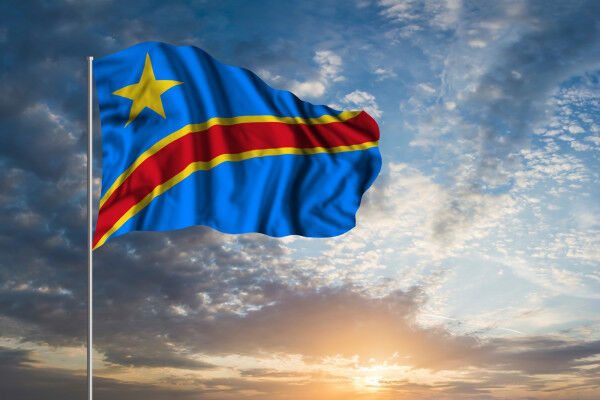
Today, June 30, 2025, the Democratic Republic of Congo marked 65 years of independence, but far from unity, the nation stands sharply divided between two centres of power, visions, and political legitimacy.
One side celebrated in Kinshasa under President Félix Tshisekedi with affirmations of sovereignty and a new peace accord.
The other, deep in the mineral-rich eastern provinces, saw Corneille Nangaa and the AFC/M23 plant a symbolic tree in Goma, the capital of North Kivu, and assert control over 34,000 square kilometres of national territory.
While President Tshisekedi hailed a recently signed agreement with Rwanda as a breakthrough in ending decades of conflict in eastern Congo, his most potent challengers on the ground were not at the negotiating table.
Instead, they were consolidating a parallel administration that now generates an estimated $1 million per day in revenue through control of mining operations in areas like Rutshuru, Masisi, and Walikale.
"We do not seek glory or power," Nangaa said in a speech marking the day. "Our commitment is to lift the DRC out of the cycle of insecurity, poverty, exclusion, dictatorship, and injustice."
Yet his words land against a backdrop of military rule and administrative control over a swathe of land larger than some European nations.
His group, AFC/M23, operates its own taxation systems, justice structures, and trade routes—a de facto state within a state.
The growing political tension was further inflamed by comments from US President Donald Trump, who after the signing of the Rwanda-DR Congo agreement boasted: "We’re getting, for the US, a lot of the mineral rights from the Congo as part of it."
This admission has intensified long-standing fears among Congolese nationalists that their country’s vast resources are being auctioned off to secure short-term peace, foreign military support, or political legitimacy.
For Nangaa, it was a confirmation of his warnings.
"To lie to both the national and international public that there is no crisis in the DRC and that it is merely a conflict between Kigali and Kinshasa is an unacceptable deception," he said.
Tshisekedi, for his part, offered reassurances in his national address.
"I must, however, clearly reaffirm the red lines of my action: the resources of the Democratic Republic of Congo will never be sold off or handed over to obscure interests," he stated.
"The DR Congo is back—ready to establish strategic, reliable, transparent, and above all, win-win partnerships."
But trust is fragile. Critics argue that the Kinshasa government is increasingly out of touch with the realities on the ground in eastern Congo, where armed groups like M23 have taken advantage of ethnic tensions, weak governance, and mineral wealth to expand influence.
"Each military offensive by the Kinshasa regime is a desperate escape forward. Its persistent refusal to engage in dialogue is a betrayal of future generations," Nangaa warned.
He laid out a list of peace overtures his movement claims to have made, including unilateral ceasefires, participation in the Doha talks, and the safe transfer of FARDC and PNC officers back to Kinshasa.
In contrast, President Tshisekedi continues to push international diplomacy and peace agreements, thanking regional leaders such as Angola’s Joao Lourenço and Kenya’s Uhuru Kenyatta for their support.
His administration touts the June agreement with Rwanda as a step forward in a conflict that has cost millions of lives and displaced even more.
"This agreement is not just a document: it is a promise of peace for the populations of Goma, Bukavu, Rutshuru, Masisi, Nyiragongo, Lubero, Ituri, and all the localities martyred by war," Tshisekedi said.
However, critics note that M23’s exclusion from this process undermines its legitimacy. The Doha process, where M23 did engage with Qatari mediation, remains stalled, allegedly sabotaged by Kinshasa's intransigence.
The chasm between these two narratives—Kinshasa's vision of a unified, sovereign state and M23's self-proclaimed mission to rescue Congo from internal collapse—is more than rhetorical.
It manifests daily in the lives of millions who now live under M23 rule, where stability may be present but democracy and human rights remain questionable.
Meanwhile, regional and international powers are playing a delicate balancing act. Western capitals, while officially backing Kinshasa, are also increasingly aware that true peace may require direct engagement with M23.
The mineral riches of eastern Congo—essential for global tech, green energy, and defence industries—remain a powerful motivator.
As Congo marked its independence, two ceremonies unfolded. One in Kinshasa, adorned in state regalia, echoed the ambitions of a post-conflict democratic future.
The other, in the east, marked by a tree planted in memory of 1965, signaled a different vision: a new Congo led not by Kinshasa, but by the Congo River Alliance and its self-declared liberators.
With elections looming and peace still elusive, one thing is clear—the battle for Congo's soul, and its resources, is far from over.
